Honey bee diseases

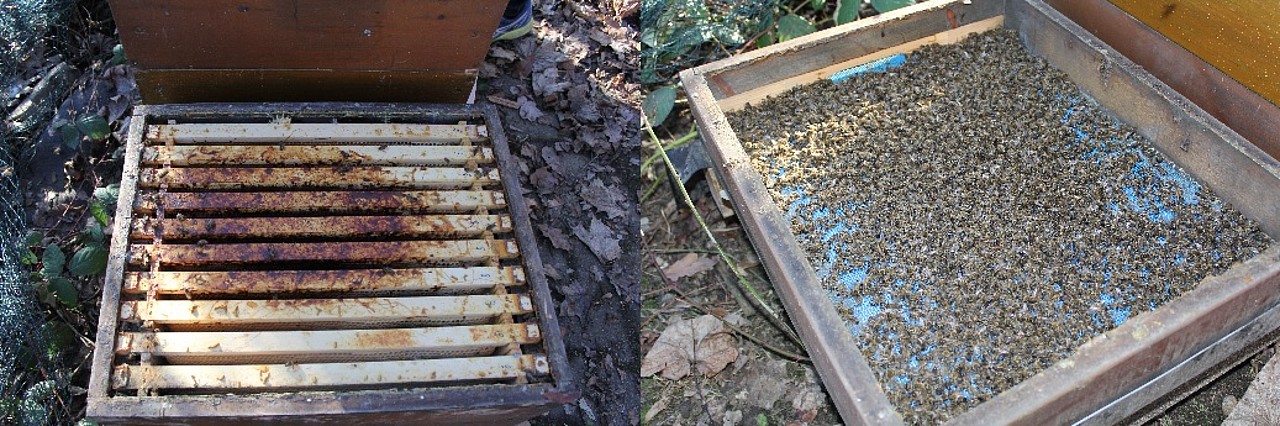
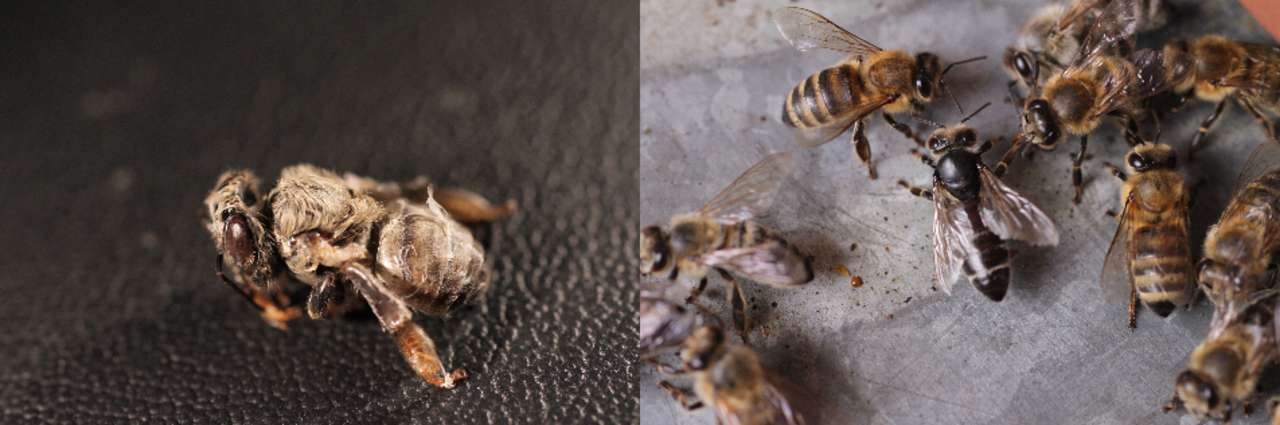
Besides the possible evironmental factors, the researches are focused on the following bee diseases:

  • Varroosis
  • Nosemosis and Amoebiasis
  • Virosis
  • Acariosis (tracheal mite)
  • American foulbrood

For more information, see the text below and this document (German).
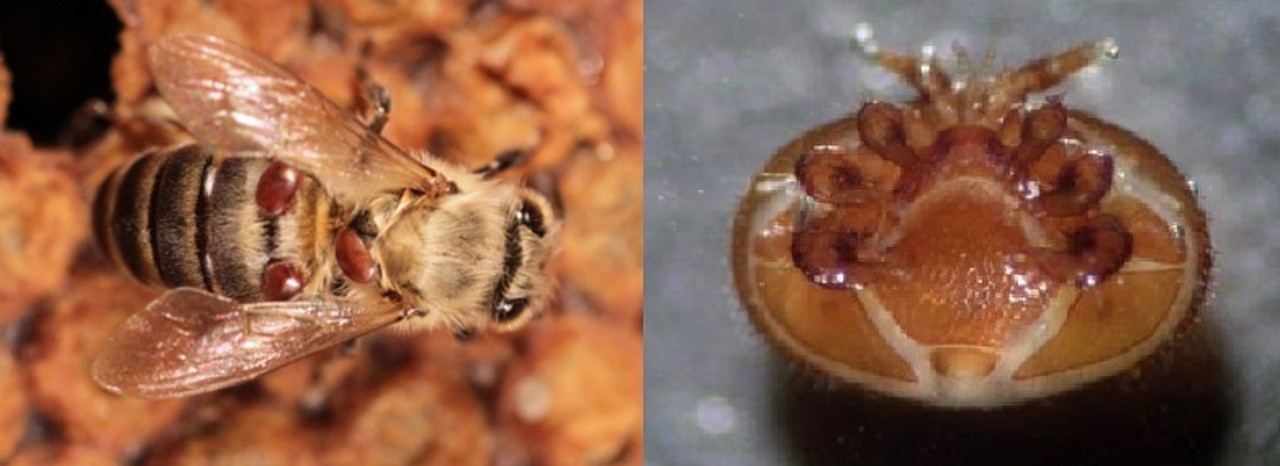
Varroosis

The mite infestation of bee colonies is recorded in July (before any summer treatment) and in October. To do so, 200 to 300 bees are weighed exactly, washed to remove mites, and the number of mites determined. The rate of mite infestation can then be correlated with an overwintering quotient (the strength of the colony in spring / strength of the colony in the previous autumn) of each bee colony.


Nosemosis

Infections with Nosemosis are diagnosed microscopically two or three times each year per colony. For this purpose, the abdomens of 10 bees per colony are ground up, mixed with some drops of water and examined under the microscope for Nosema spores. Thereafter, for two positive samples per beekeeper and year, the Nosema species (Nosema ceranae / Nosema apis) that caused the infection is determined as part of a larger molecular biological examination of colony pathogens. Examination for amoebae is undertaken together with the micoscopical examination for Nosema.

Virosis

An autumn sample of five randomly chosen colonies is analysed using molecular biological methods for acute bee paralysis virus (ABPV), deformed wing virus (DWV), sacbrood virus (SBV) and chronic bee paralysis virus (CBPV).

Acariosis (tracheal mite)

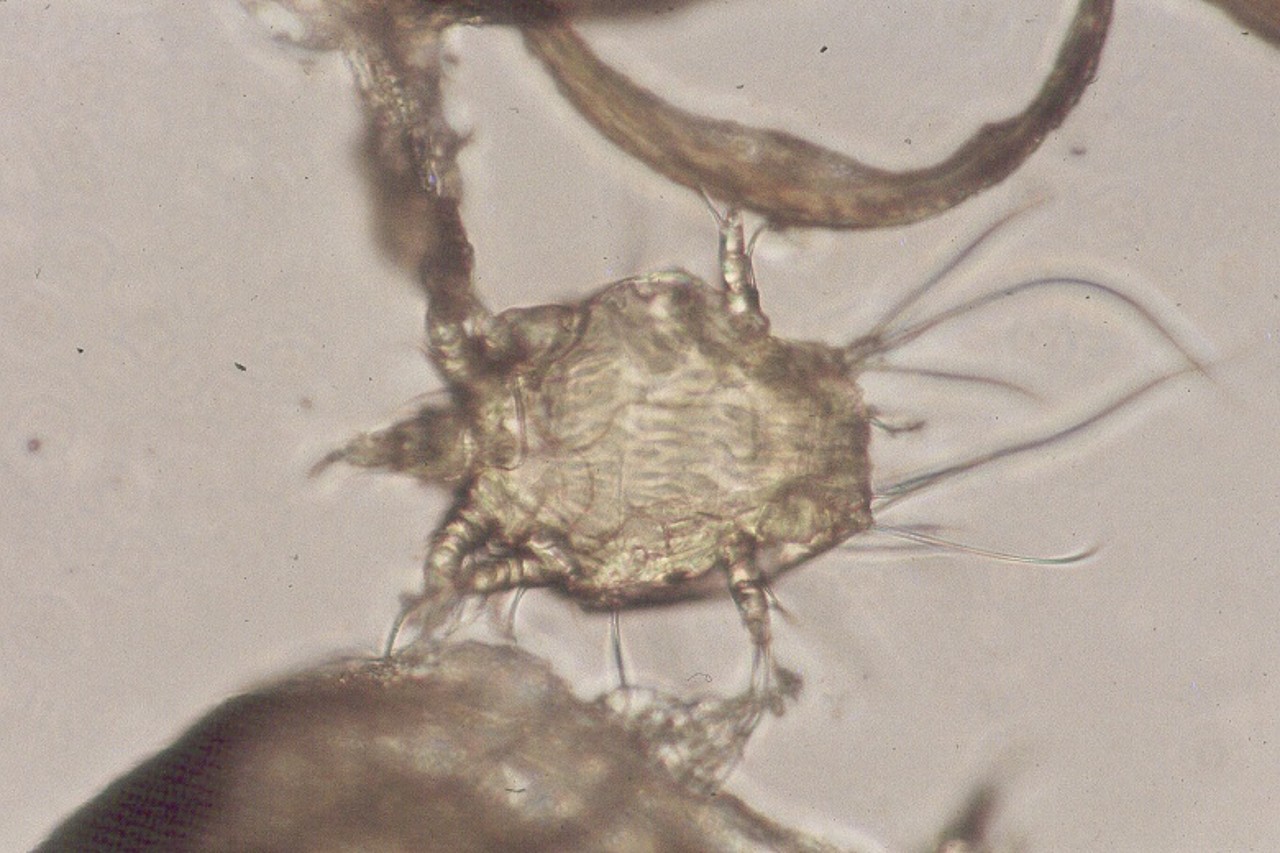
For the diagnosis of Acariosis (tracheal mite), an aggregate sample per apiary and year is examined under the microscope.

American foulbrood

Furthermore, in October, two honey samples are taken directly from the comb and examined for the spores of the bacterial pathogen causing American foulbrood  (Paenibacillus larvae).